19 May 2026
What breaks first in legacy system modernization when enterprise systems try to scale
Expert interview
Share with


In enterprise software, systems rarely break in obvious ways. They slow down, fragment, and start resisting change long before anyone calls them “legacy” — a familiar pattern in legacy software modernization efforts.
That was the case for a Netherlands-based consulting group supporting EU institutions with large-scale incident reporting and data collection. Built on outdated frameworks and file-based workflows, their platform still worked — but every new requirement made it heavier, slower, and more expensive to maintain.
What started as a functional internal system had gradually turned into a structural bottleneck for scaling operations across Europe — a common challenge in legacy system modernization approaches and enterprise platform modernization, where outdated architecture limits operational growth long before systems fully fail.
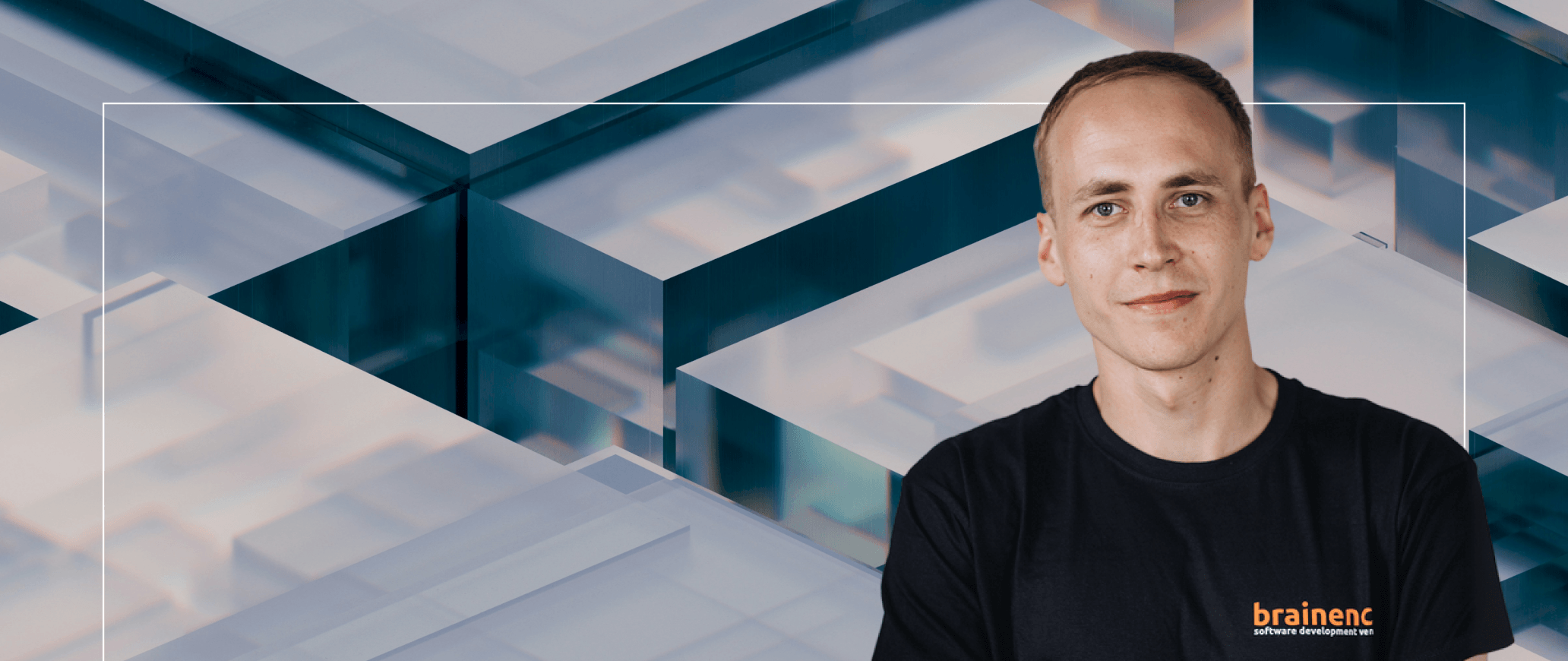
To understand what actually breaks in legacy architecture — and what it takes to rebuild it without disrupting business continuity — we spoke with Mykola Voievudskyi, Senior Full-Stack Developer and Team Lead at Brainence, who led the modernization of the platform from the ground up.

Mykola Voievudskyi
Background and experience
8+ years in .NET and 6+ in Angular and TypeScript, building scalable enterprise systems with integrations across Linnworks, logistics, shipping, tracking, and payments like Payoneer. Led modernization initiatives, including migration from Windows to Linux containers and core framework upgrades.
Many enterprise systems continue functioning long after the architecture stops scaling efficiently. In your case, when did legacy system modernization become an operational necessity?
Mykola: The turning point was when operational complexity started growing faster than the platform itself.
The system wasn’t simply outdated. It lacked a proper centralized data layer entirely. Critical operational data was stored in files, while many workflows depended on constant imports and exports. That created synchronization risks, manual overhead, and increasing fragility every time new functionality was introduced.
The platform was built on ASP.NET Forms and .NET Framework, with a large amount of boilerplate code and several architectural anti-patterns. Over time, even relatively small feature requests became difficult to implement safely, a situation often seen in legacy software modernization services when foundational design limits further evolution.
This is a common pattern in legacy environments. Systems may continue functioning technically, but internally, they become resistant to change. Scaling traffic, increasing reporting complexity, adding integrations, or supporting more users starts amplifying operational instability instead of improving capability — one of the core challenges addressed in enterprise application modernization.
Eventually, maintaining the platform became riskier than rebuilding it.
Many organizations try incremental legacy system modernization first to avoid the cost of rebuilding. What made you realize the existing architecture could no longer evolve safely?
Mykola: Incremental modernization works when the architecture still supports evolution. In our case, the architecture itself had become the constraint — a point many teams eventually reach in legacy application modernization strategies.
A large portion of engineering effort was no longer going into solving business problems. It was spent working around technical limitations created by the existing system design, which is a common failure mode in legacy software modernization services when systems are patched instead of rethought.
That is usually the moment where rebuilding becomes the more rational long-term decision.
We focused on designing a modular architecture capable of evolving over time instead of continuously patching old dependencies and workflows. One of the most important decisions was moving away from external state storage toward a proper database architecture. That alone removed a significant amount of operational friction.
We also selected cloud infrastructure designed for adaptability, not just immediate delivery needs, which directly relates to common problems in migrating legacy systems to the cloud.
A lot of legacy application modernization strategies fail because they optimize outdated architecture instead of removing the underlying constraints, creating operational bottlenecks.
One of the biggest modernization risks is rebuilding technology without improving operations. What early signals showed the new architecture was actually solving business problems?
Mykola: The first MVP iteration validated the direction surprisingly quickly because the operational improvements became visible almost immediately.
Data collection and reporting workflows became significantly simpler. We eliminated many file-based operations, automated repetitive processes, and improved report generation speed. The improved UI and UX also reduced friction for internal users, which accelerated adoption.
This is something teams often underestimate during modernization projects. Technical migration alone does not guarantee operational improvement. If users continue relying on old workflows and workarounds, the platform has not actually solved the problem, even in structured enterprise application modernization programs.
For us, the strongest validation signal was that teams naturally started using the new workflows because they were objectively faster and easier.
That was the point where we understood we were removing operational bottlenecks, not just replacing old technology — a key outcome expected from legacy system modernization services.
What hidden complexity emerged once the platform started scaling?
Mykola: Surprisingly, real-time dashboards became one of the biggest engineering challenges.
At the product level, dashboards seem relatively simple. But once systems start processing production-scale data under peak workloads, analytics infrastructure quickly becomes much more complex than expected, especially in legacy software modernization scenarios where original architectures weren’t built for real-time demands.
Visualization was a core part of the platform, so performance needed to remain stable even during heavy usage. That forced us to rethink how data was stored and processed.
We reorganized the storage layer and partially separated write and read operations to improve scalability and query performance.
This is a common issue in legacy application modernization. Many older systems were never designed for operational workloads and analytics workloads running concurrently at scale.
Legacy software modernization often accumulates unnecessary architectural complexity along the way. Were there decisions or patterns you intentionally stepped back from?
Mykola: Yes, and I think those decisions are just as important as the technologies you decide to keep.
At one point, we implemented the CQS pattern using MediatR. Initially, it looked like a reasonable architectural improvement. But relatively quickly, we realized that in our specific case, it introduced more boilerplate than actual value.
It did not significantly improve maintainability or developer experience, while increasing architectural complexity.
This happens frequently in modernization projects. There is always pressure to adopt popular frameworks or patterns simply because they are widely discussed in the industry, especially in large-scale enterprise application modernization initiatives.
But architectural decisions should reduce operational complexity, not increase it.
We deliberately avoided overengineering the platform, and that helped keep the system cleaner and easier to evolve long term.
In many EU projects, compliance stops being a legal consideration and starts shaping legacy system modernization. How did that influence architectural decisions on this platform?
Mykola: We approached compliance as an architectural requirement from the beginning, not something added later.
All platform data is stored within the EU. The system avoids unnecessary data collection and does not rely on hidden tracking mechanisms. Personal and sensitive information is encrypted and can be deleted upon request under GDPR requirements.
A lot of organizations still treat compliance as a separate legal process, but in practice, it directly affects infrastructure design, data architecture, deployment decisions, and operational trust.
That becomes especially important when platforms are used across organizations handling sensitive operational information, making compliance not just a constraint, but part of the legacy software modernization architecture itself.
Infrastructure decisions often seem interchangeable early in a project, but become critical years later during scaling and migrations. Which choice had the biggest long-term impact?
Mykola: Choosing AWS as the cloud provider.
The biggest advantage was infrastructure flexibility. Over time, operational requirements changed significantly, including our migration from Windows to Linux servers. Because the infrastructure was already designed for adaptability, those transitions became much easier to manage, especially in large-scale enterprise platform modernization initiatives where systems need to evolve without disruption.
Reliable CI/CD pipelines, scalable infrastructure, simplified DevOps operations, and sustainable operational costs all became long-term advantages.
Infrastructure decisions rarely look dramatic during the first stages of a project. Their real value becomes visible several years later when systems need to scale, evolve, or adapt without major architectural disruption.
What do companies still consistently underestimate in legacy system modernizations?
Mykola: Usually, they underestimate hidden operational dependencies.
A lot of legacy systems contain years of undocumented workflows, manual processes, reporting dependencies, and infrastructure assumptions that only become visible during migration. This is where many legacy modernization services efforts expand far beyond initial expectations.
At the beginning, modernization often looks like a technology replacement project. In reality, it becomes an operational redesign project very quickly.
Another underestimated area is data architecture. Many older systems were never designed for modern analytics workloads, real-time reporting, or large-scale integrations. Those limitations only become visible once organizations attempt to scale the platform.
And finally, teams often underestimate how important modularity becomes long-term. Systems that are difficult to extend eventually become difficult to operate as well.
Looking at how enterprise engineering workflows evolved, especially with AI-assisted development, what would you structure differently if the project started today?
Mykola: We would integrate AI-assisted development tools much earlier into the workflow.
Not for replacing engineering decisions, but for accelerating repetitive and mechanical tasks that consume significant time in long-running enterprise projects.
Modern enterprise systems involve a large amount of operational engineering work beyond pure feature development: repetitive refactoring, documentation, testing support, migrations, internal tooling, and maintenance operations — all common in legacy software modernization services.
Today, AI tooling can significantly improve engineering efficiency in those areas, especially in projects that continue evolving over many years.
The key is using AI as an operational accelerator rather than expecting it to solve architectural problems automatically.
Explore the full case study
We rebuilt a legacy, paper-heavy EU data-collection system through a structured legacy system modernization approach into a cloud-based SaaS platform for large-scale incident reporting and training evaluations across Europe. It replaced fragmented manual workflows with a centralized, real-time system that improves data accuracy, strengthens compliance, and speeds up reporting without adding operational complexity.

Modernizing legacy software for a data collection platform
Data science [1]
.Net [6]
Angular [1]
Quality Assurance [9]
SaaS development [2]
Software development [9]
UI/UX [3]
Web development [7]
FAQ
What is legacy system modernization?
Legacy system modernization is the process of upgrading outdated software, infrastructure, or workflows so the system can scale, integrate, and evolve more efficiently.
In practice, modernization is rarely just a technology upgrade. Older systems often contain fragmented workflows, manual processes, hidden dependencies, and infrastructure limitations that slow down operations over time. As organizations grow, those limitations start affecting delivery speed, reporting, integrations, compliance, and overall system stability — which is why many companies invest in legacy application modernization services, legacy software modernization, or broader enterprise application modernization initiatives.
Modernization can involve:
- Migrating from outdated frameworks to modern architectures.
- Replacing file-based workflows with centralized databases.
- Moving infrastructure to the cloud.
- Improving scalability, security, and compliance.
- Redesigning operational workflows alongside the technology itself.
The goal is not simply to rebuild software, but to remove the operational bottlenecks that prevent long-term growth.
What is modular architecture?
Modular architecture is a system design approach where software is divided into smaller, independent components that can evolve separately without affecting the entire platform.
Instead of building one tightly coupled system where every change impacts multiple areas, modular architecture organizes functionality into isolated services or modules with clearly defined responsibilities — a core principle often used in legacy system modernization and modernizing legacy applications.
This approach improves:
- Scalability. Individual modules can scale independently.
- Maintainability. Teams can update features without risking the entire system.
- Flexibility. New integrations and functionality become easier to add.
- Delivery speed. Development workflows become less dependent on large coordinated releases.
- Long-term adaptability. Systems can evolve gradually instead of requiring full rebuilds.
For enterprise platforms, modularity becomes increasingly important in enterprise application modernization efforts, as operational complexity, reporting requirements, and integrations continue growing over time.
Why do companies migrate from Windows to Linux servers?
Many organizations migrate from Windows to Linux infrastructure to improve scalability, operational flexibility, and long-term infrastructure efficiency — a common step in legacy system modernization and broader legacy application modernization strategies.
As enterprise systems grow, Linux environments often provide:
- Lower infrastructure and licensing costs.
- Better containerization and cloud-native support.
- Improved automation and DevOps workflows.
- More flexible deployment environments.
- Stronger scalability for high-load systems.
In modernization projects, migrations from Windows to Linux are often part of a broader cloud transformation strategy rather than an isolated infrastructure decision, especially in enterprise application modernization initiatives.
For this platform, the migration became significantly easier because the infrastructure had already been designed around adaptability and cloud scalability from the beginning.
How difficult is migrating enterprise systems from Windows to Linux?
The complexity depends heavily on how the original platform was designed within its legacy system modernization approaches.
Systems tightly coupled to Windows-specific dependencies, outdated frameworks, or legacy hosting environments usually require deeper architectural changes before migration becomes possible.
Common migration challenges include:
- Replacing Windows-only services or libraries.
- Updating legacy .NET Framework applications to modern .NET versions.
- Adjusting deployment pipelines and DevOps processes.
- Reconfiguring infrastructure, monitoring, and security layers.
- Ensuring compatibility across integrations and reporting systems.
Organizations that invest early in modular architecture and cloud-native infrastructure usually handle these migrations with far less operational disruption later on.
Contact us

The most impressive for me was the ability of the team to provide first-class development and meet all the deadlines.
COO, Replyco LTD,
United Kingdom

The team proactively comes up with solutions and is eager to deliver high-quality development support.
Executive, Software & Consulting Services Provider, Netherlands
I was blown away by the knowledge that Brainence has about web app development, UX and optimisation.
CEO, E-commerce Company,
United Kingdom
The project management was well-managed. We worked well together to create a refined product.
CTO, Field Service & Job Management Platform, Australia